
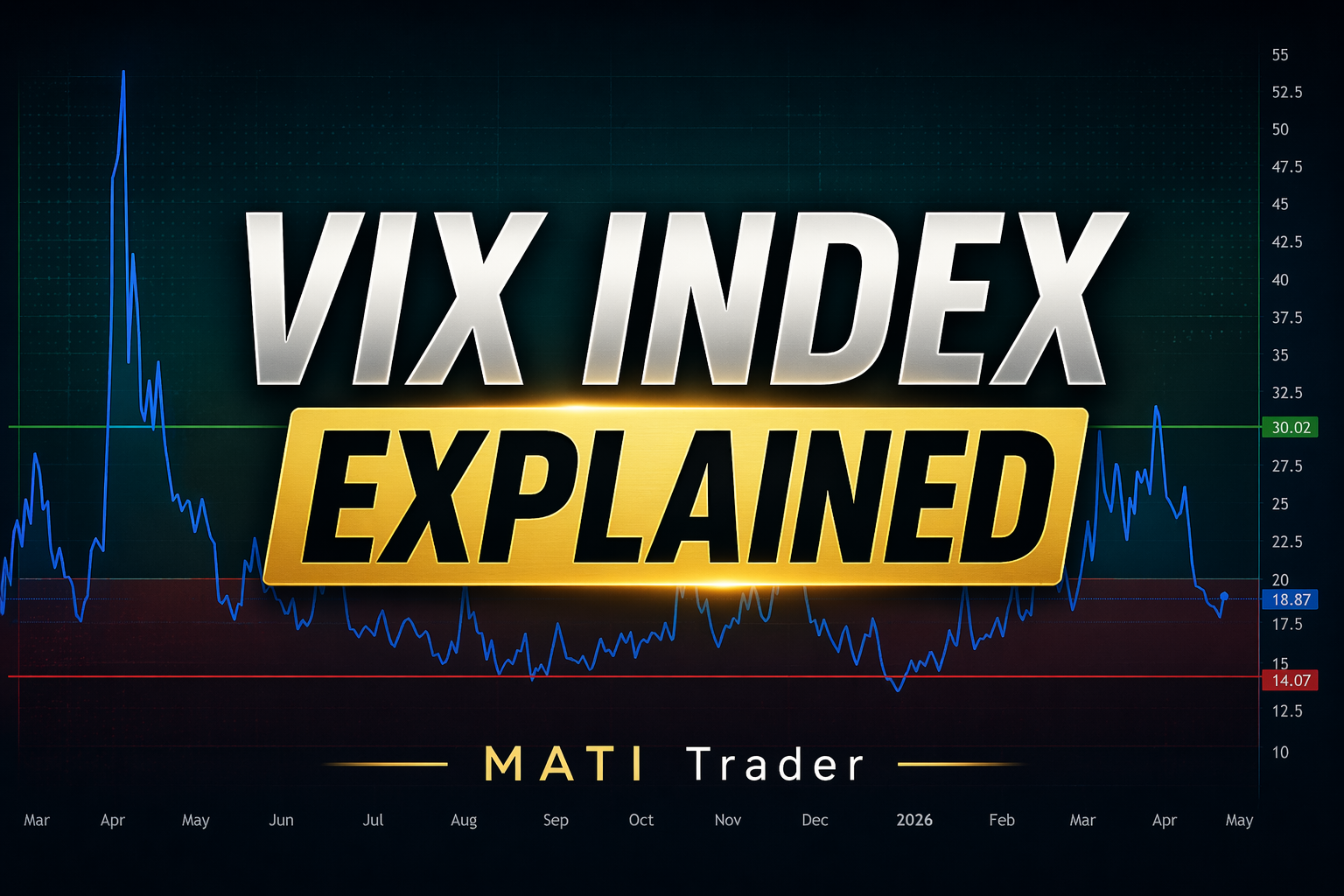
VIX INDEX EXPLAINED
Let’s get real for a second.
Most traders focus on price.
However, few pay attention to emotion.
And that’s where the edge lives and where you are ONE step ahead of the rest.
The VIX Index isn’t just another indicator.
It’s the market’s heartbeat.
Its anxiety level.
Its panic button.
I like to say:
“Price tells you what is happening. The VIX tells you how people feel about it.”
What Exactly Is the VIX Index?
The VIX (Volatility Index) is often called the “Fear Gauge” of the market.
It was created by the Chicago Board Options Exchange and is based on options pricing from the S&P 500 Index.
But forget the complicated math.
Here’s what matters:
-
The VIX measures expected volatility over the next 30 days
-
It reflects institutional positioning
-
It rises when traders are buying protection (fear)
-
It falls when traders are comfortable (complacency)
Think of it like this:
👉 If traders RUSH to buy insurance, something feels wrong (i.e. Pandemic).
👉 If no one wants insurance, means they don’t feel like anything bad will happen. – But life throws curve balls (so watch out!).
Understanding VIX Levels
Let’s simplify it into actionable zones:
-
VIX Below 20 → Calm Before the Storm
This is where things get dangerous… quietly.
-
Low volatility
-
High confidence
-
Consistent uptrends
👉 Low VIX does NOT mean safe. It means complacent.
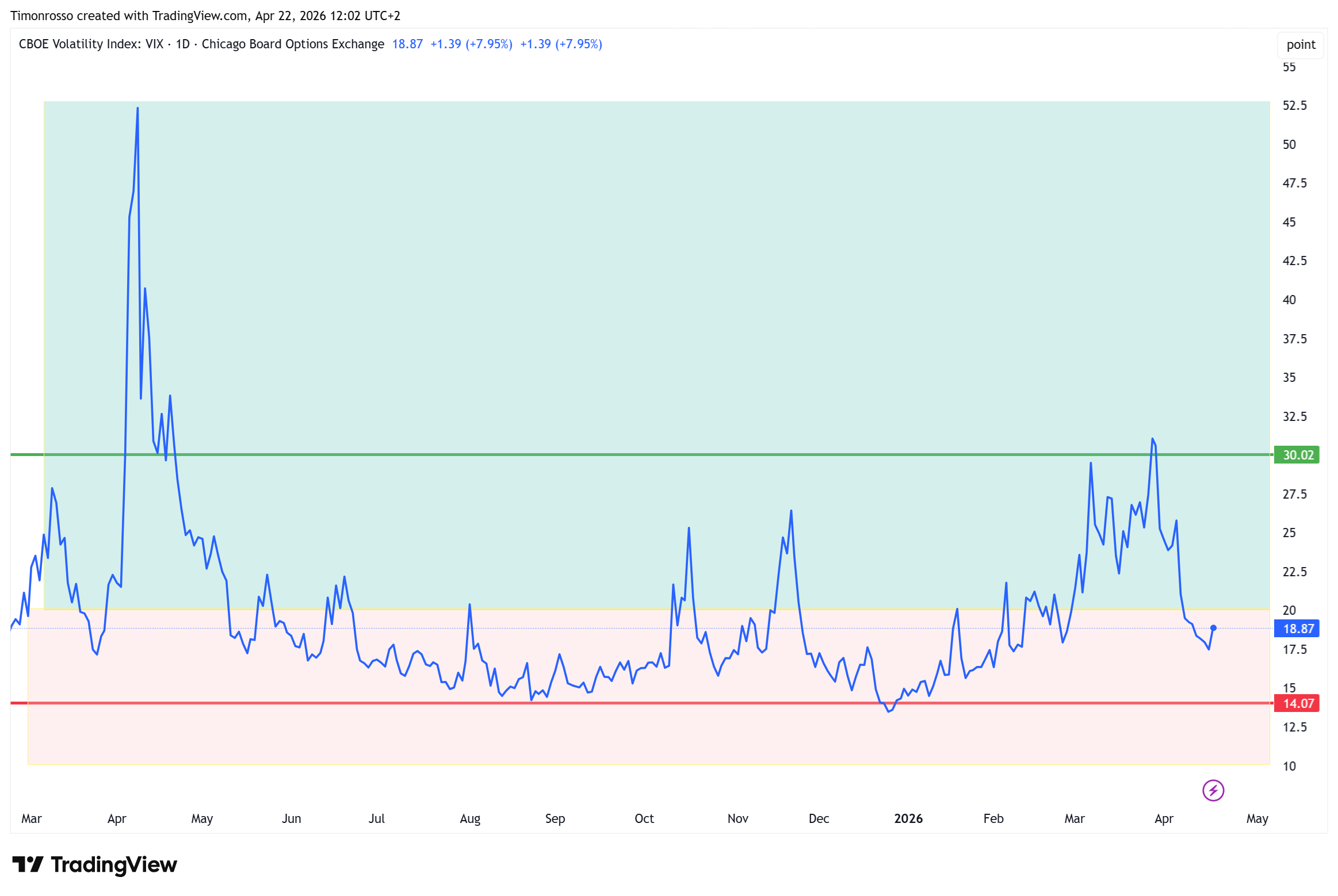
When the VIX is sitting around levels like 14.21.
-
Markets feel stable
-
Retail traders feel confident
-
Institutions start to feel cautious
-
VIX Between 20–30 → Rising Tension
This is your transition zone.
-
Volatility is increasing
-
Uncertainty is creeping in
-
Market structure starts to become unstable
This is where:
-
Pullbacks deepen
-
Fake breakouts increase
-
Emotional trading spikes
👉 This is NOT panic yet. But it’s the warning shot.
-
VIX Above 30 → Panic Mode Activated
Now things get real.
-
Fear is dominant
-
Institutions hedge aggressively
-
Markets move violently (Strong moves up and Strong moves down)
-
Stop losses and Take profits get triggered within a few candles
This is where:
-
Crashes accelerate
-
Liquidity disappears
-
Opportunities explode
Why the VIX Is a Contrarian Indicator
The VIX works best as a contrarian tool:
-
Low VIX → Too calm → instability builds
-
High VIX → BE alert for whipsaws, fake-outs and crazy moves
It’s like a pendulum:
Using the VIX in Real Trading (Actionable Strategies)
Let’s bring this into the real world.
-
Combine VIX with Price Structure
Never use the VIX alone.
Pair it with:
-
Support & resistance
-
Trend lines
Example:
-
VIX is low (<20)
-
Price is at major resistance
👉 That’s a potential short setup zone
-
Watch for Divergences
This is gold.
If:
-
Market is pushing higher
-
BUT VIX is also rising
👉 Something is off.
That’s hidden fear.
And hidden fear often leads to sharp corrections (downside).
-
Use VIX Spikes as Opportunity Signals
When VIX rises and spikes above 30+:
-
Markets are irrational
-
People are emotional
-
Medium Probability Trades: Risk less or observe
-
Retail is panicking
Breaking Down an Example (Current VIX at 14.21)
-
VIX at 14.21
-
Expectation of a potential reversal
What This Actually Tells Us:
-
The market is calm (at the moment)
-
We don’t expect very high swings
-
Stop losses and take profits get triggered after a normal amount of candles
-
There is low perceived risk (great conditions to trade)
-
Institutions are not aggressively hedging (yet)
-
The conditions are RIPENING for a big move
We then need to watch for:
-
Structure breaks
-
Volume shifts
-
VIX starting to rise from lows
That’s your trigger—not the low reading itself.
The Bigger Picture: What the VIX Really Teaches You
The VIX isn’t about volatility.
It’s about psychology and how people feel.
It teaches you:
-
When people are too confident
-
When fear is irrational
-
When opportunity hides inside chaos
-
When all is on track and smooth sailing
And most importantly:
“If you learn to read emotion… you stop reacting to it.”
Another way to become more robotic with your trading.
Key Takeaways (Quick Recap)
-
The VIX measures expected market volatility (fear)
-
Created by the CBOE, based on S&P 500 options
-
Key levels:
-
Below 20 → Complacency (potential risk building)
-
20–30 → Chill zone (Normal trading conditions)
-
Above 30 → Panic (Volatility and Medium Probability Trading)
-
Use the VIX as a contrarian indicator
-
Combine it with price structure and context
-
Low VIX ≠ immediate crash
-
High VIX ≠ immediate buying signal
-
Think in probabilities—not predictions



Trade well, live free.
Timon Rossolimos
Founder, MATI Trader
CONNECT WITH US:
Facebook Group:
http://www.facebook.com/groups/matitrader
Website:
https://timonandmati.com
FREE MATI Trader Chat Room – Discord:
https://discord.gg/c8f37kyv35

Trade well, live free.

Timon Rossolimos
Founder, MATI Trader
Not sure the best way to get started with MATI Trader?
Follow these steps to start your successful trading journey.
Step #1 – Get The FREE MATI Trader Resources:
> MATI Trader System Programme Lesson 1
> Articles
Step #2 – Own The Complete MATI Trader System:
> MATI Trader System Programme
Step #3 – Become A VIP:
> Premium MATI Trader Service